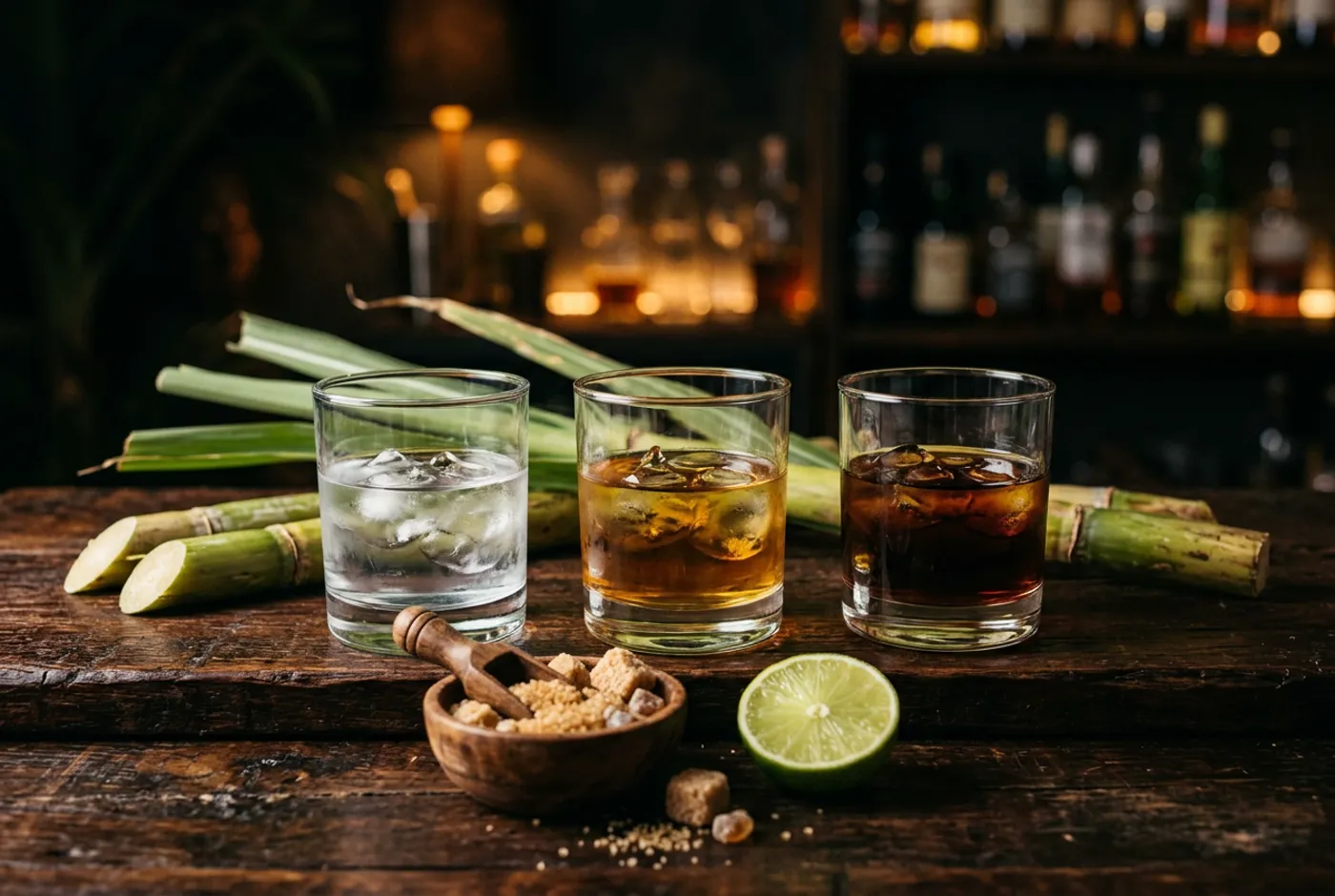
Every rum starts as the same plant. What happens to the sugarcane next decides whether you get a crisp white rum for a Mojito, a slow-sipping dark one, or something wild and grassy. Follow the branches.
Sugarcane
-
Branch one: the big family
Made from molasses
Molasses is the thick, dark syrup left over when sugar is made. Most of the world's rum starts here. It is fermented, distilled, and then goes one of four ways:
- White rum. Light and clean, often aged briefly and filtered. The classic for a Daiquiri or Mojito.
- Gold rum. A little time in oak, with soft vanilla and caramel.
- Dark or aged rum. Longer in barrels. Brown sugar, spice, dried fruit. Pour it neat or over one large ice cube.
- Spiced rum. Rum with added spices and flavorings. Sweeter, and easy with cola or ginger beer.
-
Branch two: the grassy one
Made from fresh cane juice
Skip the sugar-making stage and ferment the freshly pressed juice instead. The style known as rhum agricole is closely linked with the French Caribbean islands, such as Martinique and Guadeloupe. Expect fresh-cut grass, sugarcane, a little earthy funk, and a lot of character.
Try it in: a Ti' Punch (rum, a small spoon of cane syrup, a wedge of lime). It is simple, strong, and a good way to taste the spirit itself.
-
Branch three: the cousin
Cachaça
Brazil's national spirit is also made from fresh sugarcane juice, but it has its own name and rules. It is the heart of the Caipirinha: lime, sugar and cachaça, muddled and served over ice.
A three-glass tasting at home
- Pour a small measure of white rum, a gold or aged rum, and (if you can find one) an agricole style.
- Smell each one first. White rum is clean and sweet, aged rum smells of toffee and spice, agricole smells like cut grass.
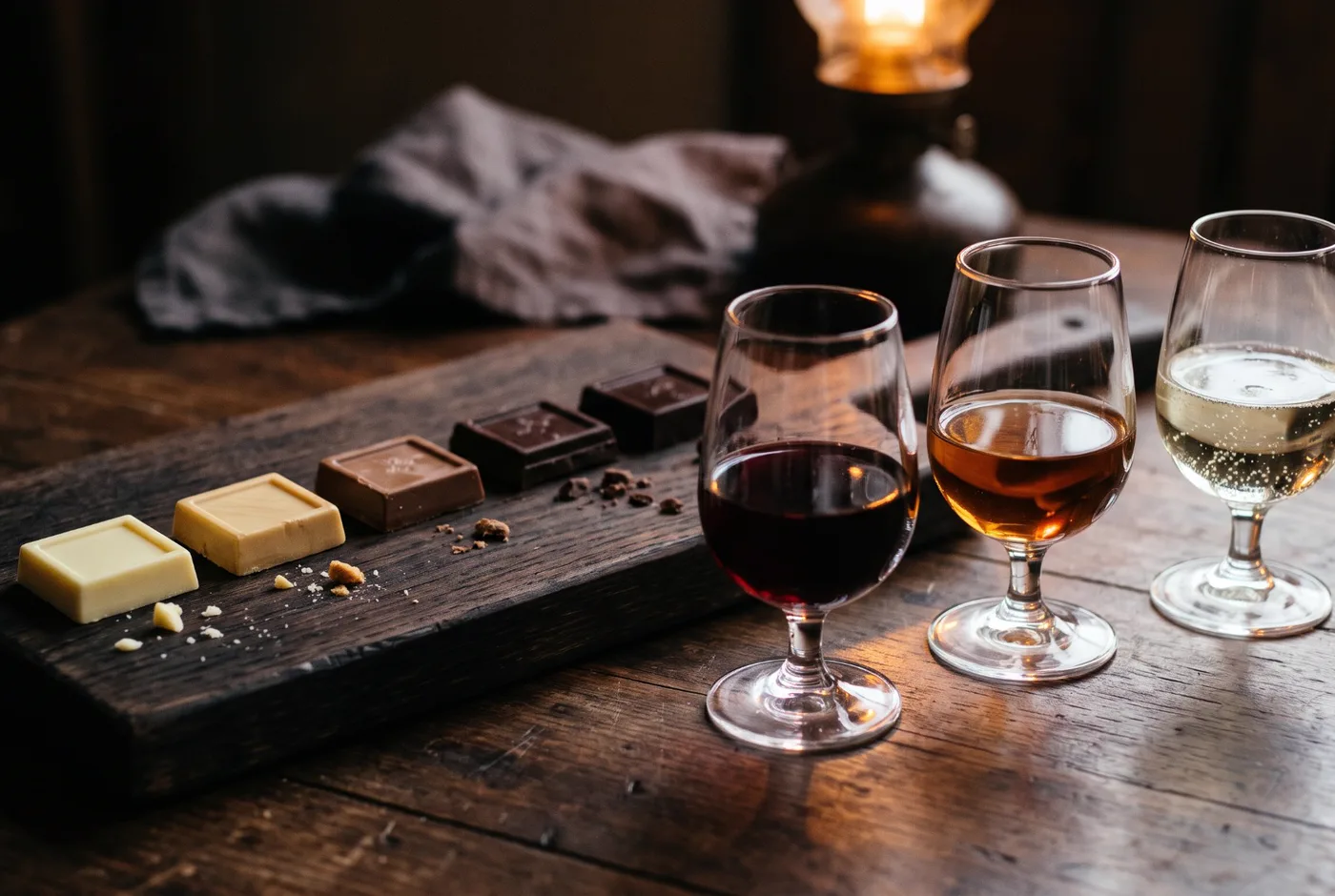
- Sip, then take a bite of something. Try lime with the white, dark chocolate with the aged, and salted nuts with the agricole.
One honest warning
Rum labels can be confusing. Words like "gold" or "dark" do not always tell you how long a rum aged, and rules differ between countries. When in doubt, read the producer's own description, or ask us.
General descriptions of rum styles, not a guide to any single brand. Please drink responsibly.