Gin is vodka's spicier cousin, and almost everything you smell in it can be found in your kitchen. Before you pour your next one, try this five-minute smell test. It will change how you taste it.
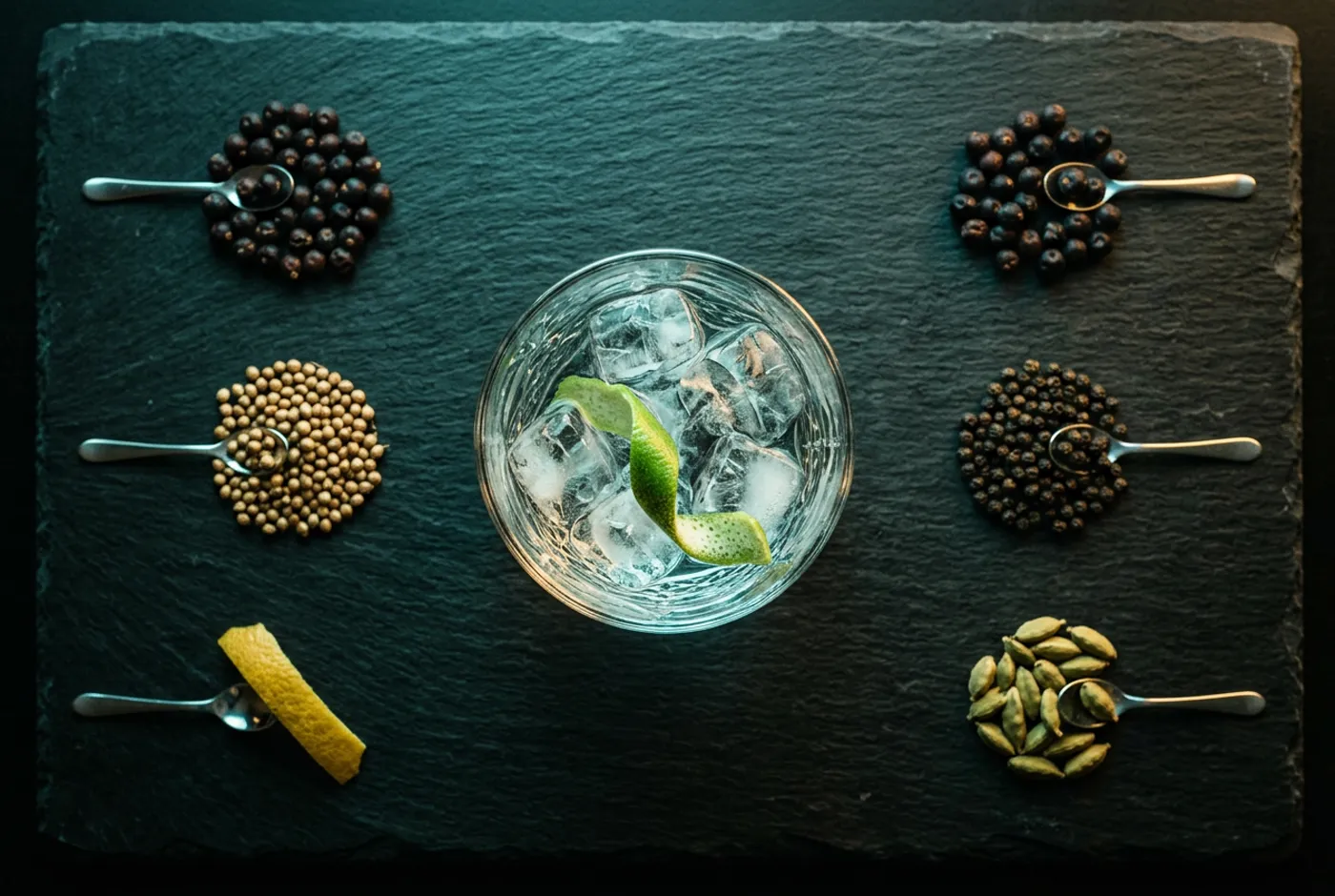
Gin is a spirit flavored with botanicals, which are plants such as berries, seeds, peels and roots. Different gins use different mixes, but juniper has to be a defining flavor in anything sold as gin in the EU and the US. Here are five common botanicals to meet first.
-
1
Juniper berry
Pine forest, resin, fresh and a little sharp.
The one that makes it gin. Crush a berry between your fingers and smell it.
-
2
Coriander seed
Orange peel, flowers and a hint of spice.
Found in many gins. It adds the citrus-and-spice lift that you notice mid-sip.
-
3
Citrus peel
Bright, oily and zesty, like the first scratch of a lemon.
Lemon or orange. It gives gin its fresh, clean top note.
-
4
Cardamom
Sweet, cool and a little minty, with warm spice.
Pop a green pod open and smell the seeds inside. A quiet star in many modern gins.
-
5
Black pepper
Warm, sharp and slightly floral.
A pinch of crushed peppercorns shows the dry, tingling edge some gins finish with.
Now the real test
- Pour a small measure of gin into a glass and swirl it. Smell it gently, not deep. Alcohol is strong.
- Ask yourself: which of the five jumps out first? Which one hides in the background?
- Taste it neat, then add a splash of water and smell again. Water opens the aromas.
- Now try a gin and tonic with a garnish that matches what you found: a lemon peel for citrus, a pinch of pepper or a cardamom pod for spice.
The payoff
Once you can name two or three botanicals in your gin, buying the next bottle gets easier. You can say "I want one more citrusy" or "less pine, more spice", and we can help you find it.
Botanicals differ between gins, and many use secret recipes. Please drink responsibly.